


When was the last time an AI demo made you sit upright and lean forward?
In our everyday life, you give a prompt to an LLM, and a few seconds later, it hands back something that would have taken you an entire afternoon: a draft report, a block of code, a vector graphic, no matter what form it might be. The next logical step is for you to open the file, review it, and make a call if the output is actually good enough to use.
The review process used to be quick. Just a couple of years ago, we were using AI for small and contained jobs, like fixing a bug or rewriting a paragraph, and checking the result took a minute. Now people ask it to build an entire website or a whole product from scratch, and it comes back with large outputs in varying files and formats. Reviewing didn't get harder as a task, but the process got difficult based on the magnitude of the output. Somewhere in there, you stopped being the person doing the work, and became the person checking it.
Many companies these days are pouring so much money into AI, looking for a big jump in productivity and performance, but what they get in return might feel clunky and slow. That's hard to explain, because the model itself is fast and efficient. But here's something that nobody says out loud: the model isn't the problem. Rather, it is about the way we use it, and the workflows we build around it.
Why your fastest AI might still feel clunky
Here's what we are actually doing. We take these efficient, autonomous AI systems and put them into workflows that were built around humans. Then we make the AI stop at every step that it takes, turn its work into something a human can review and understand, just to hand it back for the AI system to continue. We are slowing down these superfast systems to a walking pace so that a human can feel like they're in control of what's being produced at each step.

If we follow the trail of stopping AI at every step, we land on a recurring pattern: we still lean on human-readable intermediary artifacts such as code, diagrams, and PDFs. A decade ago, these formats were standard because you had to strike every blow yourself to get a result. You needed something solid to grab, inspect, and debug. That need has mostly gone away, but the formats stuck around.
So we still ask AI to give out raw HTML files, PDFs, or markdowns, not because the machine needs them to fulfill the goal, but because those formats were built for a human to open, understand, and make changes by hand. Though we have intelligent systems that can finish the job, we still make them stop at every step to produce an intermediary artifact.
Scale is what brings clarity here. Imagine an AI gives out an SVG file for a favicon, the small icon that sits in your browser tab. You could open that file to view it as an illustration, or open it in a text editor to read it. Now imagine the same AI gives out the SVG blueprint for an entire building. Nobody reads that line by line. You look at the blueprint it produces and judge the result.
There's a hidden cost in that review step nobody really talks about, and it gets paid twice. You pay it first. To check the code for the favicon SVG, you have to be able to read XML code. Reviewing an artifact means understanding the format it came in, and that skill plays an important role behind every approval you give.
Then the AI pays it. It's worth asking what the AI is even spending effort on here. Is it putting that effort into making a good drawing, or into wrapping that drawing into a structured SVG code that a person can read? It's doing both, and one of those is exclusively for us to understand or make a change. Whether SVG was ever the right way for a machine to make a drawing is also a fair question to sit with.
As these systems get more capable, the intermediary artifact starts to look like what it always was, a bridge from the old way of working into the new one. You stop reading the code, and start looking at the result to decide whether it matches what you asked for. The human in the loop, who used to be an executor, turns into a supervisor, the reviewer of the outcome. As systems shift from command-based execution to intent-based outcome specification, the user stops operating, and starts supervising.
When we say “intent-based,” that word, intent, is where it gets interesting. Supervising intent doesn't necessarily mean the same thing as watching an AI work and just nodding along at every step. If you implement it in the wrong way then you might have just traded one trap for another one.
The illusion of oversight and rubber-stamping
So your team makes the shift, you all are supervisors now, you add a new review step, and put a human in the pipeline, and give them the responsibility to approve or iterate between the AI and production. You feel safe now, but that feeling is the problem.
You already know slow, careful, line-by-line human review is the bottleneck. What most teams and business owners miss is the hidden risk they are already paying for unknowingly, and we can call that “the illusion of oversight.” Teams think they have installed a safety net by putting a human in the AI pipeline, thinking the risk sorts itself out, but it'll be too late by the time they realize what they actually installed is a human rubber stamp.
Here's why it falls apart. When you force a human to review massive amounts of AI-generated files like thousands of lines of code or a highly complex design system, and ask them to catch every problem before it ships, nobody can. Cognitive overload immediately kicks in because there's too much to review, coming in too fast. So to cope with it, the human starts to trust the machine by default, rubber stamping every output with a seal of approval because “the AI is usually right.” In behavioral science, this reflex has a name: automation bias. Or they might just use another AI to review the first AI's work.
Say an AI generated a huge code file, and a human engineer chose to use an AI Copilot to summarize, review, and check the code, because it was too much and dense to read. Why did we generate the human-readable code in the first place? Now the intermediary artifact is just a by-product in the middle, wasting compute power, and adding no value because the human isn't even reading it.
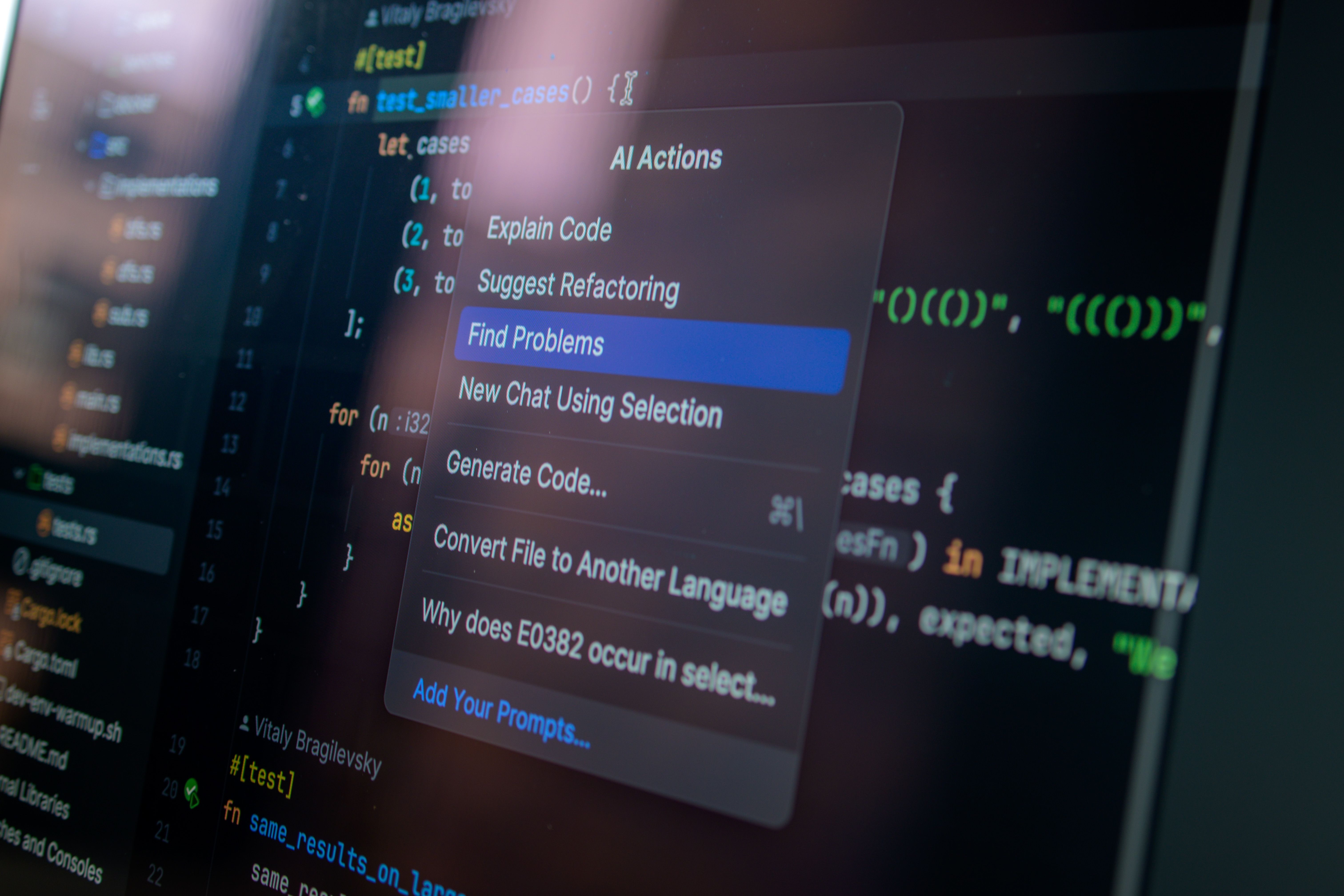
While humans in the loop are defaulting to one of the two methods, real bugs make it to production. They might be as small as unlabeled buttons, or as critical as the AI agent hallucinating and wiping the entire production database, all of which cost the business real money while the human is still in the loop.
When you give someone so many more decisions to make than what they can actually sit with and think through, their judgment gradually gets worse. Too much workload often pushes us to find simpler and easier ways to complete the task at hand, usually with some consequence attached. In this context, the human in the loop isn't really operating on the output anymore, and they are not even supervising in a real sense either. They are sitting in front of logs and dashboards, trying to review every parameter from the wall of output, with little to no guidance telling them where to look or what to worry about.
Which is why the answer was never about watching more carefully. It was about finding a better way to see whether the outcome checks all the standards set by the organization, and whether it achieves what was actually asked for. That's what an architect does with a blueprint. One person reading the output carefully was never going to cover it. So you have to stop trying to catch things at the end, decide what's allowed from the start, and validate the outcome against all the rules in the end.
Stop inspecting bricks, start planning the city
A city planner or an architect doesn't always stand at the construction site inspecting every brick themselves. Even if they wanted to, there are too many buildings and too many bricks, laid too fast, by too many hands. The city planner and the city council determine the zoning laws, put up the guardrails, and govern the master plan of the project so the finished build obeys all the laws. The architect specifies what and how to build. The builders execute on their own, bound by the zoning laws to avoid rework later.

In AI automation, the user becomes the city planner or the architect, and has to wear many hats or collaborate to achieve their desired results. They stop being the person dragging files around, and become the one who specifies the intent and confirms the builders' execution stays inside the lines. The user just states the result and the rules it has to be built inside, and the machine takes it from there, breaking the goal into steps, working out the order, and running them.
Good governance isn't about removing friction, rather it is about putting the friction exactly where it is needed. It's not about automating everything but creating a routine: low-risk work just runs on its own, and nobody has to sit and watch the output. But when the system is about to do something that could actually cause damage, or step out of the guardrails that you have initially set, it stops and makes you look before it goes ahead. And what it shows you need not be the entire output for you to hunt for the anomaly, but rather a plain summary of what the action is about to do, no fluff, just a straight answer to what happens if you go ahead and build it.
Which is really the whole point. Every interface we've built so far is for the person doing the work. What we need now is an interface specifically built for the person who has to sign off on it.
Getting the latest and most powerful model into your backend isn't the hard part anymore. What sets you apart from the rest and lets you actually answer for what you build is the layer that people use to steer it. At Kriwin, we help companies define the guardrails and the intent governance for what they are building, and establish the cognitive signifiers that sit between the fast AI system and an attention-limited human, without bottlenecking the AI to walk at a human's pace, and without the human defaulting to becoming a rubber stamp.
We turn executors into architects who can actually govern.
The models are only going to get faster. The one question that remains is whether anyone's really governing them. We make sure someone is.